Why do some buildings feel hostile while others feel like an invitation?
Witty design has the power to lower defenses before a word is spoken. In the built environment, subtle humour—through form, proportion, or unexpected visual cues—can create a sense of emotional safety by signalling friendliness, softening authority, and easing stress responses.
Neuroscientific studies show that curved architecture, human-scale features, and playful spatial transitions lower tension and promote calm, while environments perceived as rigid or impersonal often heighten physiological arousal. By embedding wit into buildings and objects, designers can trigger trust, and make spaces feel not only more engaging—but more emotionally safe to inhabit.
“Humor can reduce stress by lowering cortisol levels, enhance mood by increasing endorphin release, and provide a temporary escape from distressing emotions or situations,” says Gary Tucker, Chief Clinical Officer and Licensed Psychotherapist[1].
Research in trauma-informed design shows that environments perceived as less institutional and more emotionally engaging help regulate stress responses, especially in children and patients with PTSD[2]. This biochemical impact makes humour a powerful coping mechanism for emotional safety and resilience.
Some buildings amplify fear without meaning to—through cold materials, rigid symmetry, or an overwhelming sense of control. In trauma and treatment environments, this can heighten anxiety and make healing harder. Architectural wit offers a powerful counterbalance. A playful detail, a gentle visual surprise, or a gesture that feels human can create a sense of safety.
Wit, when used with care, becomes more than charm—it becomes a tool for fear regulation and psychological ease.
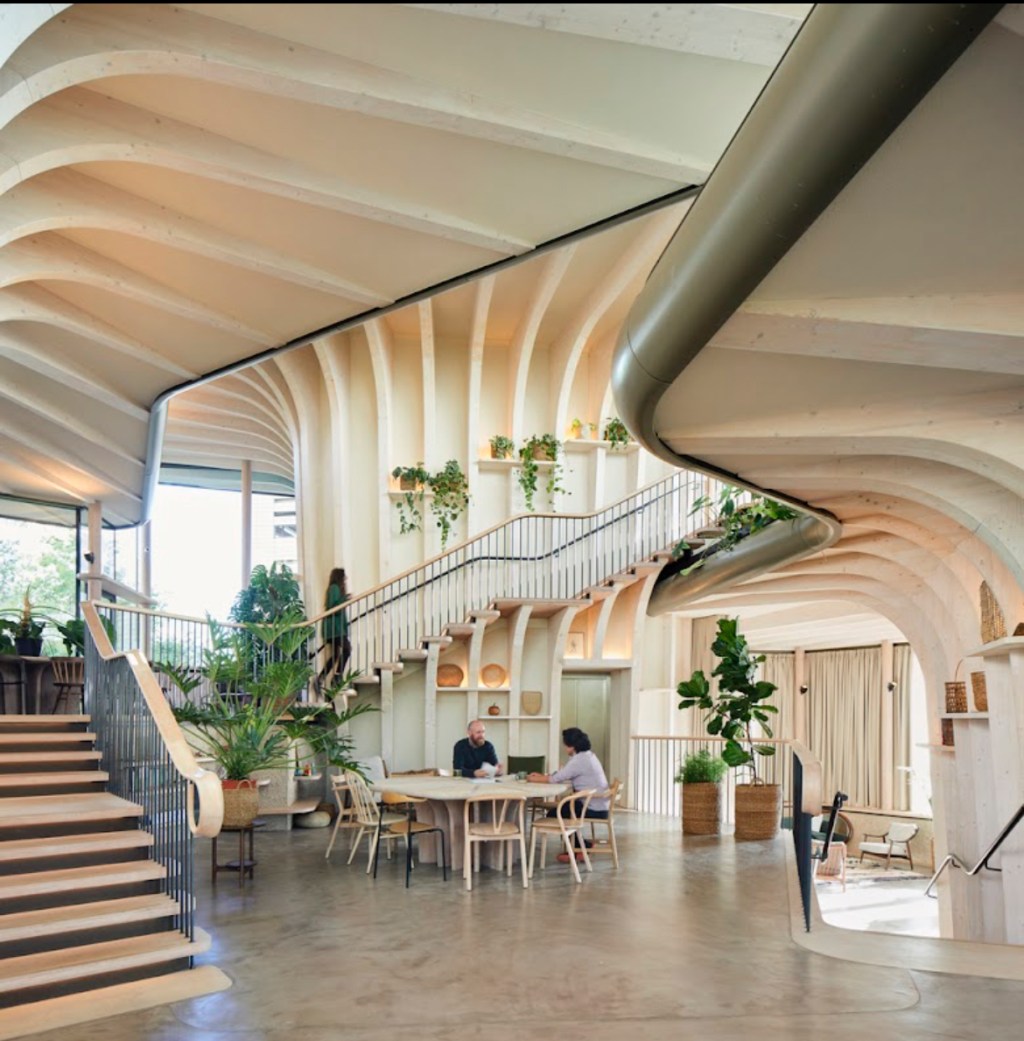
Image: Maggie’s Cancer Center in Leeds, designed by Heatherwick Studio, 2020, © Heatherwick Studio
 THE ARCHITECTS OF WIT